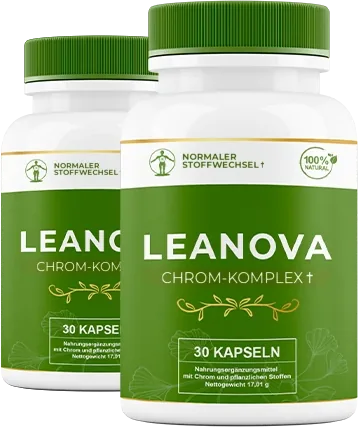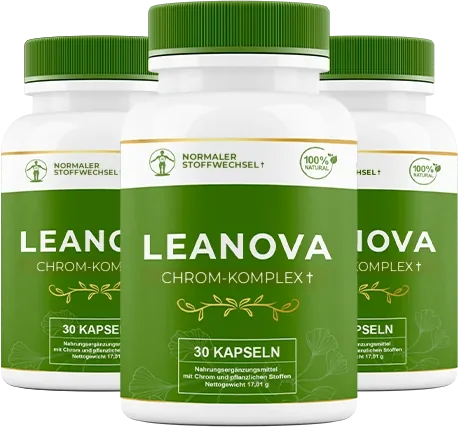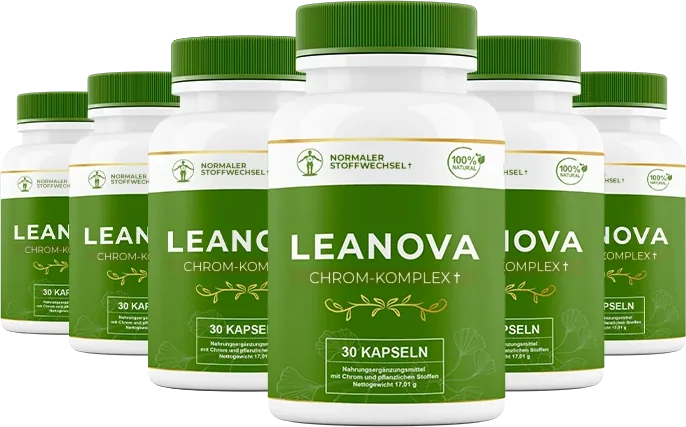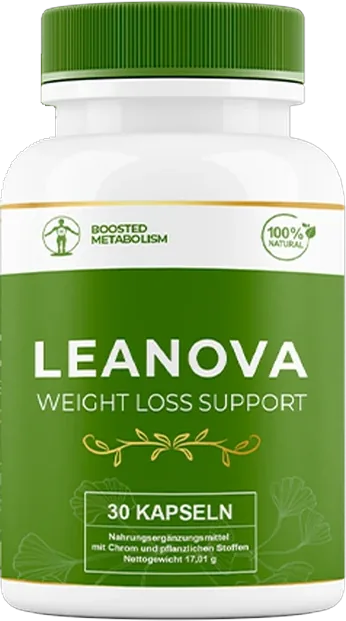
Leanova Capsules cinnamon and fenugreek are two plant names that appear on other pages that use the Leanova name, not on the bottle photos we hold1. The front labels say only that the product contains chromium and plant substances.
Both plants are familiar kitchen spices, and both are often linked online with blood sugar. That makes them easy to underestimate. This page sets out what the US National Center for Complementary and Integrative Health (NCCIH) says about each, where the evidence is weak, which safety notes matter, and how to read your own bottle's panel if it lists either one.
Fol.01Are cinnamon and fenugreek on the Leanova Capsules bottle?
Not on the photos we hold. The labels describe "chromium and plant substances" and name no plant at all1.
The German line on the front reads "Nahrungsergänzungsmittel mit Chrom und pflanzlichen Stoffen" (food supplement with chromium and plant substances). There is no Supplement Facts panel in the photos, no amounts and no directions. Only the fronts of the bottles are visible.
So "plant substances" could mean cinnamon, fenugreek, both, or neither. The label does not tell you. Other pages that use the Leanova name list both spices, but we cannot match those lists to the bottle.
The German names to look for on a back panel are:
- "Zimt" (cinnamon), sometimes "Zimtrinde" (cinnamon bark) or "Zimtextrakt" (cinnamon extract)
- "Cassia-Zimt" or "Ceylon-Zimt" (cassia or Ceylon cinnamon)
- "Bockshornklee" (fenugreek), sometimes "Bockshornkleesamen" (fenugreek seed)
Our plant extracts page covers the other plant names that circulate, and our ingredients overview shows what the photos confirm.
Fol.02What NCCIH says about cinnamon
Cinnamon is likely safe in the amounts found in food, but research does not clearly support it for any health condition, including diabetes or body weight2.
That second point is worth stressing, because cinnamon is often presented as a blood sugar spice. NCCIH's summary is plain: the research does not clearly back that up2. A spice with a kitchen reputation is not the same as a supplement that will do anything for you.
Food amounts and supplement amounts are also different things. A pinch of cinnamon on oatmeal is not the same as a concentrated extract taken every day. NCCIH's "likely safe" refers to food amounts2, so it does not tell you how a concentrated product will act.
For Leanova, the photos name no cinnamon and print no amounts1. There is no way to say how much, if any, a capsule holds, and nothing on the bottle supports a link between the capsules and blood sugar. Our benefits page covers what can honestly be said about the product.
Fol.03Cassia cinnamon, coumarin and the liver
Cassia cinnamon contains coumarin, which can harm the liver in sensitive people with prolonged use2.
NCCIH gives people with liver disease as an example of a sensitive group2. The concern is prolonged use, which is how a daily supplement is usually taken.
There is a catch: products often do not say which species of cinnamon they use2. A label that just says "cinnamon" or "Zimt" leaves the question open. If your bottle's panel lists cinnamon, look for the species. If it says cassia, or does not say, and you have a liver condition or take medicine that affects the liver, ask your doctor before use.
The same goes for anyone who already takes other cinnamon products, such as a cinnamon tea or a second supplement. Amounts add up across products. Tell your doctor and pharmacist about everything you take, because supplements can change how medicines work3.
NIH ODS also flags liver disease as one of the conditions where you should talk with a provider before trying a weight-loss supplement4.
Fol.04What NCCIH says about fenugreek
Fenugreek is likely safe in food amounts and possibly safe for adults in larger amounts, but there is not enough high-quality evidence to support it for diabetes5.
Fenugreek seeds are a common cooking spice. A supplement may use the ground seed or an extract. NCCIH's wording for larger amounts is "possibly safe" for adults5, which is a weaker rating than "likely safe" in food.
The evidence point matches what NCCIH says about cinnamon. Fenugreek is linked with blood sugar online, but the high-quality research needed to back that up is lacking5. So a panel that lists fenugreek tells you an ingredient is present, not that the product will do anything for blood sugar.
For Leanova, the photos show no fenugreek and no amounts1. Our how it works page explains why the label alone cannot tell you how the capsules act.
Fol.05Fenugreek side effects, pregnancy and children
Fenugreek can cause diarrhea, nausea and other digestive symptoms, and children and pregnant women should not use more than food amounts5.
If your bottle's panel lists fenugreek, these are the effects to watch for:
- diarrhea or loose stools
- nausea
- other stomach or gut discomfort
Stop the supplement and talk with your doctor or pharmacist if they appear. Keep the bottle so they can see the panel.
The pregnancy and child note is the stronger one. Since a supplement is by design more than a food amount, a product whose panel lists fenugreek is not one to take while pregnant, or to give to anyone under 18, without a doctor's advice. Because the Leanova photos do not name the plant substances1, the safest course if you are pregnant, nursing or under 18 is not to take the capsules until a doctor has seen the full panel.
Our side effects page lists the effects linked to every ingredient name that circulates.
Fol.06Blood sugar medicines: the question to ask first
If you take medicine for diabetes or blood sugar, ask your doctor or pharmacist before trying any product with chromium or blood-sugar-linked herbs.
Chromium is the one ingredient the Leanova photos do name1. NIH ODS says chromium supplements may interact with insulin or diabetes medicines such as metformin, and blood sugar could drop too low6. Chromium may also reduce how well the body absorbs levothyroxine, a thyroid medicine6.
Cinnamon and fenugreek add a second layer of questions, because both are linked with blood sugar. Supplements can change how medicines work, and your providers can only check this if you tell them what you take3. That includes spices taken in concentrated form.
Never change, skip or stop a medicine on your own because of a supplement. Bring the bottle and your medicine list to your pharmacist. Our medications page covers the questions to ask.
Fol.07Reading your panel for cinnamon and fenugreek
Look for each plant's name, its form and its amount; for cinnamon, also look for the species.
| Ingredient | NCCIH safety note | What to check on your panel |
|---|---|---|
| Cinnamon (Zimt) | Likely safe in food amounts; cassia coumarin can harm the liver in sensitive people | Species named (cassia or other), amount per daily portion |
| Cinnamon extract (Zimtextrakt) | Concentrated form; food-amount safety data may not apply | Amount per daily portion and species |
| Fenugreek (Bockshornklee) | Digestive side effects; no more than food amounts in pregnancy or for children | Amount per daily portion, seed or extract |
| No plant named | Not possible to assess | Ask the order desk for the full panel |
EU law requires a food-supplement label to give the amount of each substance per daily portion, the recommended daily portion and a warning not to exceed it7. If any of these are missing from your bottle, ask for them before you start. Our bottle check page covers the rest of the tub.
Fol.08How much spice could fit in one capsule?
The photos print no amounts, but by our arithmetic one whole capsule weighs about 0.57 g, shell and fillers included.
The label gives a net weight of 17.01 g for 30 capsules1. Divided out, that is roughly 567 mg per capsule. Any cinnamon or fenugreek would share that space with chromium and the other plant substances, so no single ingredient can weigh more than that figure, and each may weigh much less.
Weight alone does not settle the safety question, though. An extract can be far more concentrated than the ground spice, so a small amount of extract is not the same as a small amount of kitchen cinnamon. Only the panel can say which form is used and how much is in a daily portion.
The photos also print no daily dose1. The bottle holds 30 capsules, which would last 30 days only if your label says one capsule a day. Read the directions on the tub before you take anything, and follow the daily portion it gives.
Fol.09Steps to take before you try the capsules
Get the full panel, write down what it lists, and take that list to a doctor or pharmacist before the first capsule.
- Read the back and side panels of the bottle you receive.
- Look for "Zimt", "Bockshornklee" and any other plant name, with amounts.
- For cinnamon, note whether the species is given.
- Add the chromium amount to your list, if it is shown.
- Bring the list and your medicines to your doctor or pharmacist.
- If the panel is missing, ask the order desk for it before use.
The FDA does not approve supplements before they are sold, and makers and distributors are responsible for safety and truthful labels8. Our safety page brings these checks together.
Tool
Bottle panel checker
When your bottle arrives, or when the order desk sends the panel, tick what you see and what applies to you. You get a short list of notes and questions to take to a pharmacist. Nothing leaves your device.
Your notes
- Tick what your panel shows. With nothing ticked, the first note is simple: you have not yet seen what is inside, so ask for the panel before you take a capsule.
These notes repeat cautions from NIH, NCCIH and EU sources cited on this site. They are not medical advice and do not replace a pharmacist.
Safety: Leanova is sold for adults. The bottle photos show only the front label, which names chromium and unnamed plant substances and prints no dose or warnings. Read the full panel on your bottle before use. Chromium can matter with diabetes medicines and thyroid medicine. If you are pregnant or nursing, under 18, have a medical condition or take any medicine, ask your doctor or pharmacist first. Never change a prescribed medicine on your own. Stop and get medical help for chest pain, trouble breathing or swallowing, fainting, severe stomach pain, muscle pain with dark urine, or yellow skin or eyes.
Frequently asked questions
Where would cinnamon show up on a Leanova bottle, if at all?
Only on the back panel, which we have not seen; the front labels name just chromium and unnamed plant substances. Check the back panel of your bottle for "Zimt" or cinnamon and, if listed, which species it is.
Do Leanova Capsules list fenugreek on the label?
The front labels in our photos do not. Look for "Bockshornklee", the German word for fenugreek, on the back panel of the bottle you receive.
If my Leanova panel shows cinnamon extract, what should I check?
Check the species and the amount per daily portion. Cassia cinnamon contains coumarin, which can harm the liver in sensitive people with prolonged use, so ask your doctor if you have a liver condition.
Which stomach effects are tied to fenugreek, a name linked to Leanova?
If your panel lists fenugreek, NCCIH names diarrhea, nausea and other digestive symptoms. Pregnant women and children should not use more than food amounts.
I take diabetes medicine. Do the blood sugar herbs linked to Leanova matter?
Yes, ask your doctor or pharmacist first. Chromium, the one named ingredient, may interact with diabetes medicines, and cinnamon and fenugreek are linked with blood sugar online, though NCCIH finds the evidence weak.